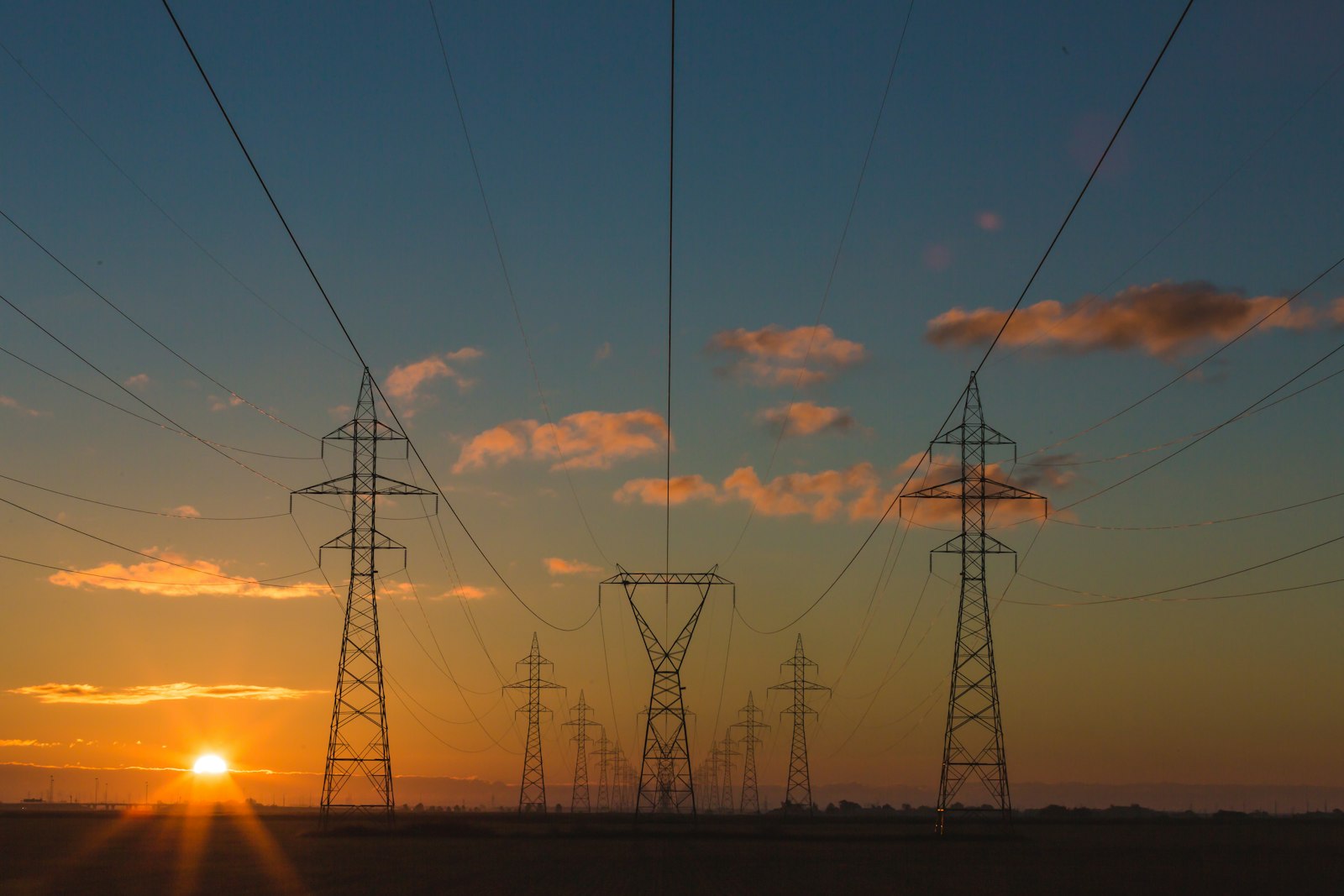
Photo: Matthew Henry via Unsplash (Unsplash License)
Quick Answer: As of November 19, 2026, the Public Utility Commission of Texas has approved the state’s first 765-kV transmission lines. Two Oncor lines covering more than 400 miles were approved on August 28, 2026, and AEP Texas and CPS Energy’s roughly 370-mile Howard–Solstice line received a final order on September 18. The lines are the first approvals of ERCOT’s $32.99 billion 765-kV plan. The rest of the plan is still in the approval process, and the PUCT has proposed changing how transmission costs are divided among customers.
Texas has never built a 765-kilovolt power line inside the ERCOT grid. The state’s high-voltage backbone has relied on 345-kV lines. That is changing. In 2026, state regulators approved the first extra-high-voltage routes, landowners along the corridors began hearing from utilities, and lawmakers signaled they want to revisit the approval process when the Legislature meets in 2027.
This article explains what has been approved, what the full plan includes, why ERCOT chose 765 kV, and how the costs could reach Texas electric bills.
What is the Permian Basin Reliability Plan?
The plan began with House Bill 5066, which the Texas Legislature passed in 2023 and Governor Greg Abbott signed. The bill, authored by Rep. Charlie Geren of Fort Worth, directed ERCOT to plan transmission for fast-growing areas, starting with the Permian Basin. It passed nearly unanimously in both chambers, according to the Texas Tribune.
ERCOT published the Permian Basin Reliability Plan in July 2024. According to an August 2026 ERCOT letter to Rep. Geren, the plan projected Permian Basin load of 23,659 MW in 2030 and 26,400 MW in 2038. The PUCT approved the plan in October 2024. In April 2025, the commission chose the 765-kV option for the plan’s three import paths, the lines that carry power into West Texas. T&D World reported that the 765-kV option could cost about 22% more than the 345-kV alternative.
Why did ERCOT choose 765 kV over 345 kV?
The main reason is capacity per corridor. Oncor says one 765-kV line carries as much power as three double-circuit 345-kV lines. A 765-kV line needs a right-of-way of about 200 feet, compared with 480 feet for three 345-kV lines carrying the same power. Typical 765-kV towers are 155 to 160 feet tall. Typical 345-kV towers are 120 to 125 feet tall. Oncor notes that more than 2,400 miles of 765-kV lines already operate across the U.S. and Canada.
ERCOT compared a 345-kV plan with its 765-kV Strategic Transmission Expansion Plan (STEP) Core Plan. ERCOT found the 765-kV plan would reduce system-wide transmission losses by about 5%, or about 560 GWh a year. It would also provide 600 to 3,000 MW more transfer capability. Its estimated consumer cost reduction was about $229 million higher than the 345-kV plan’s.
In its August 12, 2026 letter, ERCOT said a 345-kV-only approach would rely heavily on upgrading or rebuilding existing lines. That would require many outages on equipment already in service, on a system where ERCOT manages more than 200,000 outages a year. ERCOT called 765 kV the “optimal engineering option” and said the need for 765-kV lines begins in 2030.
Which 765-kV lines has the PUCT approved?
On August 28, 2026, the five-member commission unanimously approved Oncor’s applications for the north Permian Basin route, called Import Path 1. The route has two segments: Dinosaur to Longshore and Longshore to Drill Hole. The Texas Tribune reported that the approvals cover more than 400 miles, run southwest from Bosque County and cross at least 30 counties. The Tribune described the projects as costing about a billion dollars each. The San Saba News reported that Chairman Gleeson filed memos the night before the vote recommending approval and adding a landowner accommodation provision.
At the same meeting, the commission postponed a decision on the Howard–Solstice line through South Texas. According to AEP Transmission’s project page, the PUCT issued a final order for that line on September 18, 2026. The roughly 370-mile line will connect AEP Texas’ Solstice Substation near Fort Stockton with CPS Energy’s Howard Substation southwest of San Antonio. AEP plans landowner meetings along the final route in fall 2026. The western half is expected to use lattice and guyed structures with typical heights of 140 to 160 feet, a 200-foot right-of-way and about 1,400 feet between structures.
| Project | Utilities | Size | Status (as of Nov. 19, 2026) |
|---|---|---|---|
| Dinosaur–Longshore and Longshore–Drill Hole (Import Path 1) | Oncor | More than 400 miles combined | Approved by PUCT Aug. 28, 2026 |
| Howard–Solstice | AEP Texas, CPS Energy | About 370 miles | PUCT final order Sept. 18, 2026 |
| Big Hill–Sand Lake | Oncor, LCRA | Not stated by Oncor | Listed by Oncor as a CCN application (Docket 59182) |
| Bell County East–Big Hill | Oncor, LCRA | Not stated by Oncor | Listed by Oncor as a CCN application (Docket 59475) |
| STEP Eastern Backbone | AEP Texas, CPS Energy, Oncor, CenterPoint | About 1,109 miles; $9.384 billion | ERCOT Board endorsed Dec. 2025; in service 2030–2032 (estimate) |
Sources: Texas Tribune; AEP Transmission; Oncor; ERCOT Board materials.
How big is the full 765-kV plan?
The three Permian import paths are only the first part. ERCOT Board materials show the full 765-kV STEP Core Plan would cost about $32.99 billion. It includes about 3,441 miles of new right-of-way and 2,831 miles of line upgrades. The plan also includes a Western Loop and an Eastern Backbone. The ERCOT Board approved both on December 9, 2025. The Sierra Club’s Texas chapter identifies the Western Loop as an Oncor and AEP line running from Drill Hole to Sand Lake to Solstice.
What does the Eastern Backbone include?
AEP Texas, CPS Energy, Oncor and CenterPoint Energy Houston Electric jointly proposed the Eastern Backbone. Its estimated cost is $9.384 billion. The project would build about 1,108.8 miles of new single-circuit 765-kV line in a loop through Dinosaur, Watermill, Martin Lake, Hillje, Blu Lacy, Howard and Bell East. Its longest segment, Martin Lake to Hillje, is 292.8 miles. The project also includes four new 765-kV substations or switchyards, 11 765/345-kV transformers and 43 765-kV breakers. ERCOT’s estimated in-service window is 2030 to 2032, depending on environmental, licensing, regulatory, right-of-way and construction factors. ERCOT’s Technical Advisory Committee endorsed the project on November 19, 2025, with two votes against and two abstentions.
ERCOT’s 2025 Regional Transmission Plan, published in December 2025, added another 765-kV path between Houston and Central Texas. The Euclid–Hillje line is about 130 miles long and would bring about 2,000 MW of import capacity into Central Texas under base-case summer peak conditions. The 2025 plan included 192 reliability projects, up from 145 in the 2024 plan.
| Key fact | Figure |
|---|---|
| Full 765-kV STEP Core Plan cost | About $32.99 billion |
| New right-of-way / line upgrades | About 3,441 miles / 2,831 miles |
| Permian load forecast (Reliability Plan) | 23,659 MW in 2030; 26,400 MW in 2038 |
| Year 765-kV need begins | 2030 (ERCOT) |
| Congestion cost to customers, 2020–2024 | About $10 billion (ERCOT market monitor estimate cited by Oncor) |
| Right-of-way: one 765-kV line vs. three 345-kV lines | About 200 feet vs. 480 feet |
Why does ERCOT say the lines are needed now?
ERCOT’s August 2026 letter cited planning risks as well as engineering. More than 600 utility studies supporting ERCOT’s large-load interconnection process assume the 765-kV additions, as do 58 reviewed regional transmission projects. ERCOT said those studies would be invalidated if the lines were delayed or denied. ERCOT also pointed to a February 23, 2026 market notice that warned of possible local load shed in Far West Texas during high-load, low-wind nights.
The plan also supports new generation. ERCOT said its 2025 Regional Transmission Plan includes 17 Texas Energy Fund natural gas units at six sites in the West Load Zone. The Texas Oil and Gas Association’s president has said transmission is a precondition for new natural gas plants, according to the Texas Tribune. The Tribune also reported that Diamondback Energy, a Midland company, generates 80 MW of its own power and receives 330 MW from the grid. An industry representative said interconnection waits for businesses in the Permian exceed two years.
Oncor points to cost as well as reliability. It cites an estimate from ERCOT’s independent market monitor that transmission congestion cost customers about $10 billion from 2020 through 2024.
What concerns have landowners and lawmakers raised?
The approvals were contested. The Texas Tribune reported that the five 765-kV applications drew hundreds of administrative protests and interventions. Landowners began receiving notice letters in December 2025, and some said they had 21 days to respond. Landowners also argued that the 180-day review period set by state law was too short for projects this large, and that ERCOT should have studied more alternatives. The commission’s administrative law judges agreed that Oncor did not give landowners enough time to contest its applications. The commissioners still found that Oncor met legal requirements.
Lawmakers have raised concerns too. In July 2026, Senate Business and Commerce Committee Chair Charles Schwertner asked the PUCT to deny the applications until the Legislature reforms the process, and Lt. Gov. Dan Patrick endorsed the letter. In August, Sen. Kevin Sparks asked regulators to pause the plan, warning that tens of billions of dollars in construction costs could end up on residential bills. Rep. Ken King also asked for time to change the process. Reform proposals are expected in the 2027 legislative session.
How will Texans pay for the new lines?
Transmission costs in ERCOT are recovered through regulated rates, so the allocation method matters. Today, ERCOT transmission costs are assigned using the “4CP” method. It is based on each distribution provider’s demand during the four monthly system peaks from June through September. The Sierra Club’s Texas chapter reported that the PUCT found this method shifts more cost onto residential customers.
On July 9, 2026, the PUCT issued a proposed rule in Project No. 58000 to replace 4CP with a “12CP” method. Each distribution provider’s billing load would be the average of its demand during the 12 monthly ERCOT system peaks, measured in 30-minute intervals from October through September. The proposal also creates a minimum billing demand for large loads. It is set at the highest of contracted peak demand, the highest non-coincident peak over the past year or 12CP demand. Billing would start when capacity is made available, even if the customer has not energized, and would run for 240 monthly payments. The Sierra Club reported that the PUCT estimated an earlier staff version of the change would lower residential transmission charges by about 10%. Comments on the proposed rule were due August 11, 2026.
When will the lines be built?
Construction schedules for individual lines are not yet public. ERCOT’s August 2026 letter dates the 765-kV need to 2030. The Eastern Backbone carries an estimated 2030 to 2032 in-service window. For the approved Oncor and Howard–Solstice routes, the next steps are right-of-way acquisition, final design and construction.
Frequently Asked Questions
Has Texas approved 765-kV transmission lines?
Yes. The PUCT approved Oncor’s Dinosaur–Longshore and Longshore–Drill Hole lines on August 28, 2026, and issued a final order for AEP Texas and CPS Energy’s Howard–Solstice line on September 18, 2026. They will be the first 765-kV lines in the ERCOT region.
How much will the Texas 765-kV plan cost?
ERCOT estimates the full 765-kV STEP Core Plan at about $32.99 billion, including about 3,441 miles of new right-of-way. The Eastern Backbone alone is estimated at $9.384 billion.
Why use 765 kV instead of 345 kV?
Oncor says one 765-kV line carries as much power as three double-circuit 345-kV lines on less than half the right-of-way. ERCOT found the 765-kV plan reduced transmission losses by about 5% and added 600 to 3,000 MW of transfer capability.
Will the lines raise Texas electric bills?
Transmission costs are recovered through rates. The PUCT has proposed moving from 4CP to 12CP cost allocation and setting minimum billing for large loads. The Sierra Club reported that the PUCT estimated an earlier staff version would lower residential transmission charges by about 10%.
When will the new lines be in service?
ERCOT says the 765-kV need begins in 2030. The Eastern Backbone is estimated to enter service between 2030 and 2032. Utilities have not published final in-service dates for the approved Permian lines.
Sources and Further Reading
- Texas Regulators Approve Two Massive West Texas Transmission Lines — The Texas Tribune
- Response to Rep. Charlie Geren, August 12, 2026 — Electric Reliability Council of Texas
- 765-kV STEP Eastern Backbone RPG Project, Board Item 14.1 — Electric Reliability Council of Texas
- 2025 Regional Transmission Plan Final Update, January 2026 — Electric Reliability Council of Texas
- Howard–Solstice Transmission Line Project — AEP Transmission
- 765-kV Transmission — Oncor Electric Delivery
- Project No. 58000 Proposal for Publication, July 9, 2026 — Public Utility Commission of Texas
- PUCT Approves Development of First Extra-High Voltage Transmission Lines in ERCOT Region — T&D World
- Texas Transmission Series Part 2: Texas’ $33 Billion Transmission Plan — Sierra Club Lone Star Chapter
- PUC Approves Dinosaur and Drill Hole 765kV CCN Applications — San Saba News