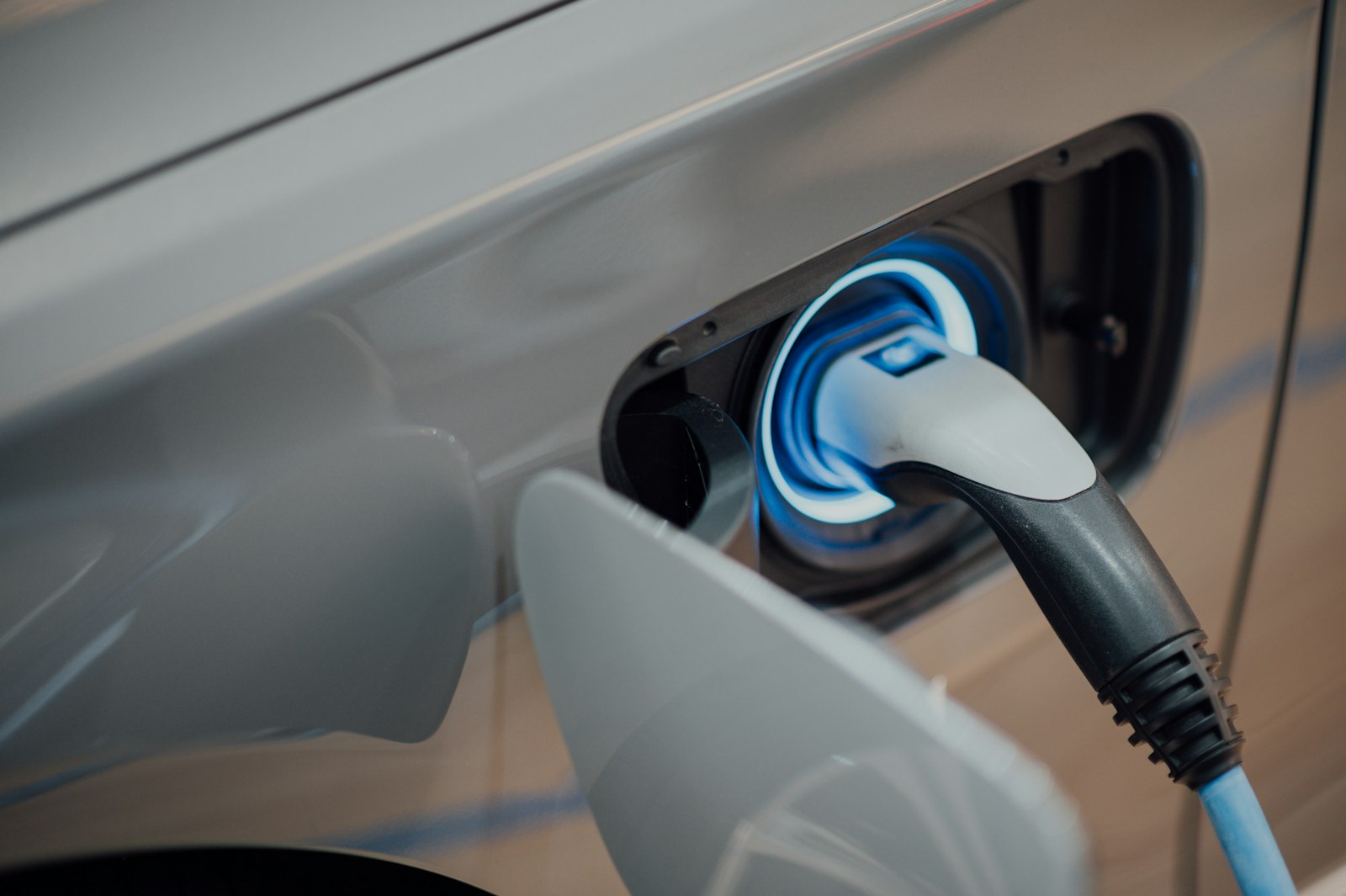
Photo by CHUTTERSNAP on Unsplash (Unsplash License)
Quick Answer: Texas had 532,282 registered electric vehicles, including plug-in hybrids, in TxDOT’s latest 2026 count, up from 456,667 at the end of 2025. To keep pace, TxDOT has awarded $226 million in federal NEVI funds for 321 new charging stations, while 22 Phase I highway stations are open. The state had 13,303 public charging ports, according to the U.S. Department of Energy.
Electric vehicles are still a small share of the roughly 27 million vehicles registered in Texas, but they are the fastest-growing category on the road, and their charging needs are becoming a real part of the state’s electricity and infrastructure planning. State and federal data released in 2025 and 2026 show EV registrations climbing by tens of thousands of vehicles in a matter of months and a charging network that is expanding from highway corridors into cities and county seats.
This report compiles the latest figures from the Texas Department of Transportation, the Texas Department of Motor Vehicles, the U.S. Department of Energy’s Alternative Fuels Data Center and the Federal Highway Administration to show how fast Texas EV adoption is growing and how the charging buildout is progressing.
How many electric vehicles are registered in Texas?
TxDOT reported in February 2026 that the number of electric vehicles registered in Texas, including plug-in hybrids and fully electric vehicles, had more than tripled to 456,667 between July 2022 and the end of 2025. In a later 2026 update, TxDOT said the number had climbed to 532,282. That is an increase of 75,615 vehicles, or about 16.6%, from the end-of-2025 figure.
Citing the Texas Department of Motor Vehicles, TxDOT said every week Texas sees about 1,500 additional EVs on the road. At that pace, Texas would add roughly 78,000 EVs a year.
What does the TxDMV fiscal year report show?
The Texas DMV’s Alternatively Fueled Vehicle Report for fiscal year 2025 counted 334,709 battery electric vehicles at the end of the fiscal year, 1.24% of the 26,959,137 vehicles registered in Texas. That was up 34.91% from 248,096 a year earlier and up 452.98% from 60,528 in fiscal 2021. The TxDMV report does not list plug-in hybrids separately, which is one reason its electric vehicle count is lower than TxDOT’s figures.
Gasoline hybrids are an even larger group. The DMV counted 669,209 hybrids at the end of fiscal 2025, up 30.64% from 512,256. In total, Texas had 1,010,862 alternatively fueled vehicles, 3.75% of all registered vehicles, up 31.79% from 767,031. Electric vehicles accounted for 33.1% of those alternatively fueled vehicles and hybrids for 66.2%.
| Fuel Type | FY2024 | FY2025 | Change |
|---|---|---|---|
| Battery electric | 248,096 | 334,709 | +34.91% |
| Hybrid (gasoline) | 512,256 | 669,209 | +30.64% |
| Natural gas | N/A | 4,436 | N/A |
| Propane | N/A | 2,325 | N/A |
| Ethanol | N/A | 144 | N/A |
| Hybrid (diesel) | N/A | 27 | N/A |
| Hydrogen fuel cell | N/A | 12 | N/A |
| Total AFVs | 767,031 | 1,010,862 | +31.79% |
Source: Texas Department of Motor Vehicles, Alternatively Fueled Vehicle Report, Fiscal Year 2025. Prior-year figures shown where reported.
How do federal data compare?
The U.S. Department of Energy’s Alternative Fuels Data Center, using 2025 registration data from TransAtlas and Experian, lists 387,400 electric vehicles, 79,900 plug-in hybrids and 1,048,900 hybrid electric vehicles in Texas. Combined, its electric and plug-in hybrid figures total 467,300, close to TxDOT’s end-of-2025 count. The same dataset shows 21,532,000 gasoline vehicles and 780,000 diesel vehicles, underscoring that EVs remain a small share of the fleet even as they grow quickly.
How many EV chargers are there in Texas?
The Alternative Fuels Data Center reports 13,303 public electric vehicle charging ports in Texas and 1,052 private ports. Including all fuels, the agency lists 15,052 alternative fueling stations in the state. With 532,282 EVs and plug-in hybrids registered, Texas has about 40 plug-in vehicles for every public charging port, though many EV owners also charge at home. TxDOT figures cited by Spectrum News in May 2026 put the number of charging stations in Texas at more than 4,300, with about 300 more planned in 2026 using NEVI funds. Station and port counts differ because a single station often has several ports.
| Fuel | Public | Private |
|---|---|---|
| Electric charging ports | 13,303 | 1,052 |
| Propane stations | 330 | 29 |
| E85 stations | 231 | 9 |
| CNG stations | 54 | 31 |
| LNG stations | 4 | 1 |
| Biodiesel (B20+) stations | 2 | 5 |
| Hydrogen stations | 1 | 0 |
Source: U.S. Department of Energy, Alternative Fuels Data Center, Texas state page.
What is TxDOT building with NEVI funds?
The National Electric Vehicle Infrastructure (NEVI) program is a federal formula program that funds public fast-charging stations. In August 2025, the Federal Highway Administration approved TxDOT’s FY 2026 Texas NEVI Deployment Plan, which established TxDOT’s eligibility to obligate its current NEVI formula apportionment to charging projects consistent with the plan.
Phase I: highway corridors
Phase I focuses on stations along Texas highways. In February 2026, TxDOT said it had built 14 NEVI charging stations, used more than 20,000 times since opening, with 23 under construction and 28 in planning. In its later update, TxDOT reported 22 Phase I stations open, five more expected by the end of 2026 and another 30 planned to open in 2027. Recently opened stations include sites in Wichita Falls, Mount Pleasant, Van, Selma, Natalia, Encinal, Three Rivers and Kerrville, with stations under construction in Corsicana and Mission.
Is the Phase I highway network complete?
In a letter dated January 2, 2026, the FHWA Texas Division certified Texas’ Phase I alternative fuel corridors as “fully built out,” which cleared the way for Phase II in calendar 2026. TxDOT’s supporting documentation listed 13 NEVI stations open at that time, five scheduled for early 2026, 19 obligated, seven in grant agreements and 21 programmed in state and regional transportation plans. It also counted 374 non-NEVI DC fast-charging stations that meet NEVI criteria, a reminder that private networks provide much of the state’s fast-charging capacity.
The same documentation gave a detailed profile of the fleet as of January 5, 2026: 456,667 registered EVs across 251 of Texas’ 254 counties, with 84.12% battery electric and 15.88% plug-in hybrid. EVs made up about 1.8% of registered vehicles excluding trailers, and the count had risen about ninefold since 2020.
Phase II: cities and county seats
Under Phase II, TxDOT has awarded $226 million in federal funds for 321 charging stations across the state, including 264 in metropolitan planning organization areas and 57 in county seats. That works out to an average of about $704,000 in federal funding per station. Phase II shifts the program from highway corridors toward the places where EV owners live and work. TxDOT’s planning documents identify 148 county seats and 24 metropolitan planning organizations for Phase II, and set design requirements of four ports per station, a site footprint of at least 300 kW, at least 150 kW per port and a location within one mile of a designated alternative fuel corridor.
| EVs and plug-in hybrids registered (latest TxDOT count) | 532,282 |
| EVs and plug-in hybrids, end of 2025 | 456,667 |
| New EVs per week (TxDMV via TxDOT) | About 1,500 |
| Battery EVs, end of FY2025 (TxDMV) | 334,709 (1.24% of vehicles) |
| Public charging ports (AFDC) | 13,303 |
| NEVI Phase I stations open | 22; 5 more by end of 2026; 30 in 2027 |
| NEVI Phase II awards | $226 million for 321 stations |
| FHWA approval of FY 2026 NEVI plan | August 26, 2025 |
How is Texas regulating EV chargers?
Texas now regulates public EV charging stations through the Texas Department of Licensing and Regulation. Under Senate Bill 1001 from the 88th Legislature, with rules in Chapter 96 of Title 16 of the Texas Administrative Code, charging station operators had to register by March 1, 2025. Regulatory requirements took effect March 1, 2026, for units installed on or after March 1, 2025, and on-site inspections apply after that date. TDLR reported 86 licensees in fiscal 2025.
| Authority | SB 1001 (88th Legislature); 16 TAC Chapter 96 |
| Registration deadline | March 1, 2025 |
| Requirements effective | March 1, 2026 (units installed on or after March 1, 2025) |
| Initial fee | $30 per port |
| Renewal fee | $25 per port |
| Consumer sticker | $1 |
| Legacy units on digital network by | January 1, 2030 |
| Licensees (FY2025) | 86 |
Source: Texas Department of Licensing and Regulation, EV Charging at a Glance.
TDLR’s rules require that pricing and any surcharges be disclosed before a charging session begins, and legacy units must operate on a digital network by January 1, 2030. For station owners, per-port fees and inspections are now a routine cost of operating public chargers in Texas.
Are EV sales slowing?
Registrations keep climbing, but new sales have been uneven. Spectrum News reported in May 2026 that Cox Automotive data showed April new EV sales down 6% from the prior month and 23% from a year earlier. Because registrations count the total fleet, they can keep rising even when monthly sales soften, which helps explain the difference between strong registration growth and weaker sales headlines.
What does EV growth mean for Texas electricity?
A new, flexible load
Every EV added to Texas roads is a new electricity customer. At roughly 1,500 new EVs a week, charging demand is growing steadily, though it remains modest compared with industrial and data center loads on the ERCOT grid. Much of the impact depends on when drivers charge. Home charging overnight, when demand is lower, places less strain on the grid than charging during late-afternoon peaks.
Fast chargers are concentrated loads
Public fast-charging stations draw substantial power in short bursts. The 321 Phase II stations and dozens of Phase I highway sites will require utility interconnections, transformers and, in some cases, distribution upgrades. That ties the NEVI buildout to the same equipment and utility capacity that other fast-growing loads are competing for.
Fuel cost context
The Alternative Fuels Data Center lists July 2026 Gulf Coast fuel prices at $3.47 per gallon for gasoline and $3.96 for diesel, compared with national averages of $3.84 and $4.37. Relatively low gasoline prices in Texas reduce the fuel-savings argument for EVs compared with higher-cost states, yet Texas EV registrations have still grown rapidly, suggesting that other factors such as vehicle choice and convenience are driving adoption.
What should Texas businesses watch?
For fleet operators, utilities, retailers and real estate owners, the numbers point to several practical issues. Phase II’s focus on metro areas and county seats means more public chargers near shopping centers, travel stops and commercial properties, creating potential partnerships for site hosts. Utilities will see more requests for fast-charging interconnections. And with EV and hybrid registrations both growing more than 30% a year in the TxDMV data, fleet electrification and charging access are becoming mainstream planning questions rather than niche ones.
Equipment suppliers and electrical contractors are also part of the picture. Each NEVI station requires site design, electrical service, chargers and ongoing maintenance, and TxDOT’s schedule calls for dozens of openings through 2027 on top of the 321 Phase II awards.
Frequently Asked Questions
How many electric vehicles are in Texas?
TxDOT’s latest 2026 count is 532,282 electric vehicles, including plug-in hybrids, up from 456,667 at the end of 2025.
How many public EV charging ports does Texas have?
The U.S. Department of Energy’s Alternative Fuels Data Center lists 13,303 public charging ports in Texas.
How much NEVI money has Texas awarded?
TxDOT has awarded $226 million in federal NEVI funds for 321 charging stations in Phase II, including 264 in metropolitan areas and 57 in county seats.
How fast are Texas EV registrations growing?
TxDOT, citing TxDMV data, says Texas adds about 1,500 EVs a week. The TxDMV counted 34.91% growth in battery electric vehicles in fiscal 2025.
Who regulates EV charging stations in Texas?
The Texas Department of Licensing and Regulation oversees public EV charging stations under SB 1001. Operators pay $30 per port to register and $25 per port to renew, and inspections began after March 1, 2026.
What share of Texas vehicles are electric?
Battery electric vehicles were 1.24% of the 26,959,137 vehicles registered at the end of fiscal 2025, according to the TxDMV.
Sources and Further Reading
- TxDOT Expands Electric Vehicle Charging Network, Texas Department of Transportation
- Meeting Demand for Electric Vehicle Infrastructure, Texas Department of Transportation
- Alternatively Fueled Vehicle Report, Fiscal Year 2025, Texas Department of Motor Vehicles
- Texas Transportation Data for Alternative Fuels and Vehicles, U.S. Department of Energy Alternative Fuels Data Center
- Approval of the FY 2026 Texas NEVI Deployment Plan, Federal Highway Administration
- Texas NEVI Alternative Fuel Corridors Fully Built Out Certification, Federal Highway Administration and Texas Department of Transportation
- EV Charging at a Glance, Texas Department of Licensing and Regulation
- Texas Drivers, Experts Discuss the State of Electric Vehicles and EV Infrastructure, Spectrum News